
Can I sell a house with foundation problems?
Yes. Foundation trouble makes a house hard to sell to buyers who need a mortgage, because inspectors flag it and lenders may refuse the loan until it is repaired. A cash buyer like me can buy it as it is and take on the repair.
Cincinnati has a lot of older houses on hills, with stone or block foundations that have been carrying the same load for a hundred years. Water, freeze and thaw, and moving soil take a toll. A foundation problem is serious, but it is also something experienced buyers deal with all the time.
What are the signs of a foundation problem?
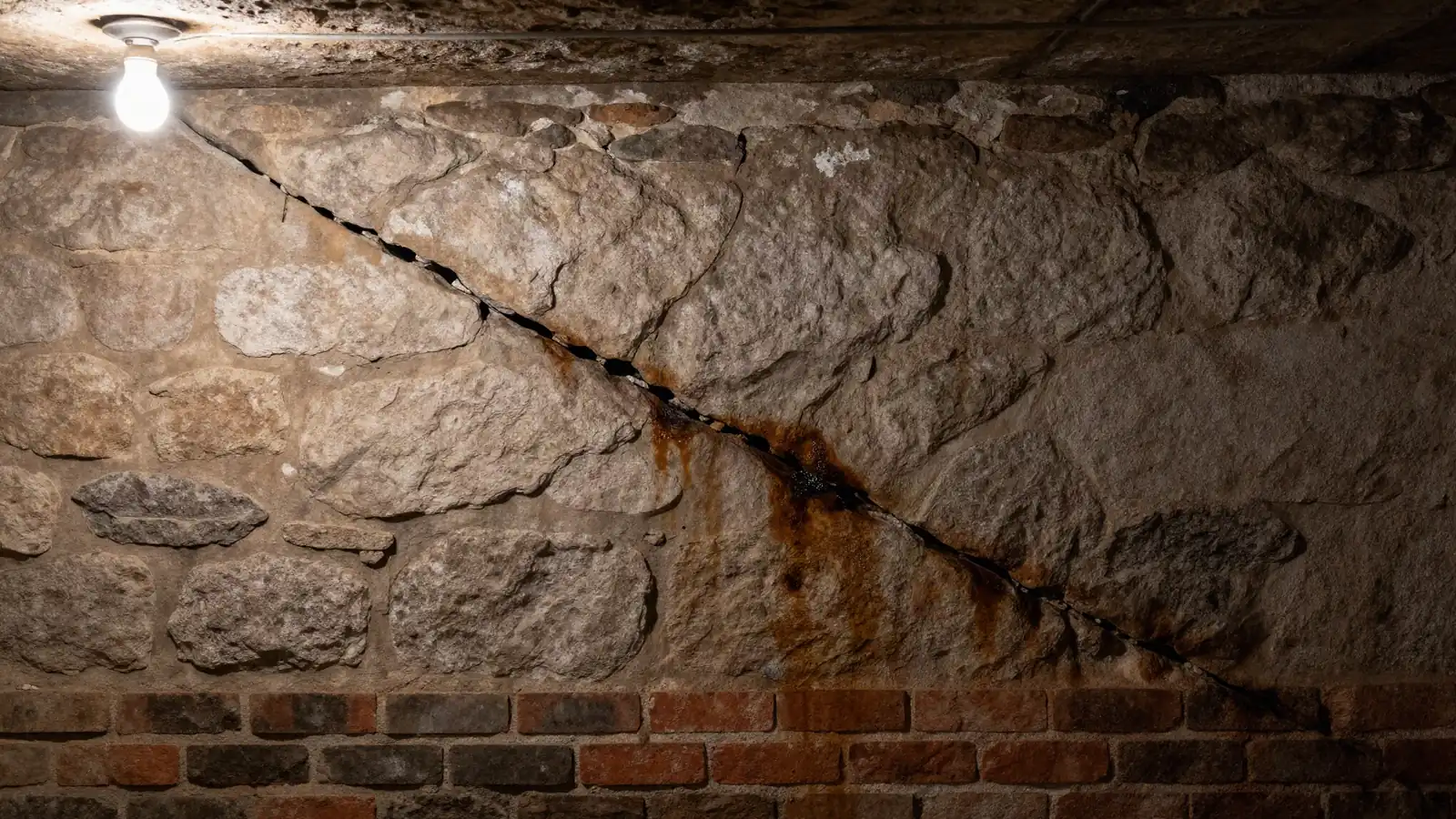
Look for cracks in basement walls, especially diagonal or stair-step cracks, walls that bow inward, doors and windows that stick or no longer close, sloping floors, gaps where walls meet ceilings, and water coming into the basement. One sign alone may be minor; several together usually are not.
- Horizontal cracks or bowing in a block or stone wall.
- Stair-step cracks in brick or block.
- Doors that drift open or will not latch.
- Floors you can feel slope underfoot.
- Water or efflorescence (white residue) on basement walls.
A structural engineer can tell you what is actually happening. If you already have a report or a contractor's estimate, share it with me; it helps me give you an accurate number.
Why do foundation problems stop traditional sales?
The buyer's inspector finds the problem, the buyer asks for a repair or a big price cut, and the lender's appraiser may require the repair before closing. Many deals fall apart at that point, after weeks of waiting.
Every failed contract also costs you time on the market and more months of carrying the house. Selling directly means the problem is understood and priced up front, with no inspection surprise at the end.
Do I have to disclose foundation problems in Ohio?
Yes, if you know about them. Most sellers of a one-to-four family home complete Ohio's residential property disclosure form, which asks specifically about the structure, foundation and water in the basement. Answer it honestly. It protects you from a claim after the sale.
The form is required by ORC 5302.30, with exemptions for estates, court-ordered sales and some other transfers. When you sell to me, the problem you disclose is simply part of what I am buying.
How does a repair estimate affect my price?
A buyer who plans to fix the house subtracts the repair, plus some margin for what they cannot see yet, from what the house would be worth repaired. That is how I price it too, and I will walk you through the numbers so the offer makes sense.
Foundation work varies enormously, from sealing a few cracks to rebuilding a wall. If you have bids, the offer can reflect them. If you do not, I estimate from what I see and tell you what I assumed.
What if the house has other problems too?
It usually does: water damage, an old roof, outdated systems. I buy houses with all of it at once, as they are. You do not need to fix one problem to sell the house with the others.
See selling a house that needs repairs and selling a house as-is.
Greg Carpenter is a licensed real estate agent in Ohio. When Deforest Solutions makes you an offer, Greg is buying the house for himself, not as your agent.